
This past Saturday, South Africa observed Women’s Day. While many celebrated with flowers, speeches, and social media tributes, I found myself in a very different space. It was far from the bright stage lights and cheerful greetings.
I spent the day listening to the darker side of motherhood. This is a place where hope clashes with exhaustion, joy morphs into shame, and a new mother’s love is buried beneath a mountain of intrusive and frightening thoughts.
As part of my research for my upcoming book, Taming the Monster of Postpartum Depression, I interviewed a woman who asked to remain anonymous. She opened up about a moment she has carried in her heart like a scar.
“I am ashamed to say that the crying irritated the hell out of me. One day, she was crying so badly that I started shaking the baby,” she confessed, with tears streaming down her cheeks. “I am so ashamed; she did not deserve that,” she continued between sobs. “Why do I love her now and not then? She did not deserve me. I even thought of holding a pillow to her to get her to stop crying.”
The weight of her words hung in the air. These were not the confessions of a monster. They were the words of a mother trapped in a storm of postpartum depression and anxiety. It was a storm so fierce that her mind whispered unthinkable ideas.
The Reality We Don’t Want to Face
The topic of infanticide, the killing of a child under one year of age, is rarely discussed openly. Yet it is a chilling reality.
Globally, it is measured per 100,000 live births. In the United States, the rate is 8 per 100,000, the highest in the Western world. But when I looked deeper into the South African picture, the numbers were even more staggering.
According to the study “Child deaths in South Africa: Lessons from the child death review pilot”by Shanaaz Mathews, Lorna Jean Martin, David Coetzee, and Christiaan Scott (Research Gate, August 2016),
South Africa has an infanticide rate of 28.3 per 100,000 live births. This is the highest reported rate globally.
Another study, “Comparing trends in infanticides in 28 countries, 1960–2009” by Noora Ellonen, Juha Kääriäinen, Martti Lehti, and Mikko Aaltonen (Journal of Scandinavian Studies in Criminology and Crime Prevention, 3 July 2015), confirms just how alarming these numbers are compared to international data.
Behind these statistics are stories, many hidden under layers of shame. In South Africa, some cases are disguised as abandonment. Babies are left in fields, toilets, or wrapped in blankets by the roadside.
It is easy to label these as criminal acts. However, many of these women are not hardened criminals. They are mothers in desperate, hopeless situations, often isolated, with no emotional, financial, or practical support.
The Monster No One Talks About
Forensic psychiatrists have found that convicted mothers often describe experiencing intrusive thoughts. These are repetitive, unwanted mental images of harming their children. They speak of it as though there is a monster inside them, urging them toward actions they would never consider in a healthy mental state.
These thoughts can terrify a new mother. Yet, because of taboos around topics like molestation, abuse and depression, too many women suffer in silence.
My guest told me,
“We don’t talk about these things. It’s taboo. You are just expected to be grateful and happy. But when you are drowning inside, the silence can kill you. Or worse.”
Why Women’s Day Felt Different This Year
On Women’s Day, I celebrated not with parades or speeches but with a mother who had managed to fight off those dark, intrusive thoughts. She had reached the point where she could speak about her pain without fear of judgment.
But not all stories end this way.
When women don’t feel safe enough to talk about their mental health struggles, when the shame outweighs the support, sometimes the unthinkable happens.
And when it does, society asks, “How could she?” when the real question is, “Why didn’t we see the signs and help sooner?”
The Urgent Need for Awareness and Support
South Africa’s high infanticide rate is not just a law enforcement issue. It is a mental health crisis. And it requires all of us to be part of the solution.
Caregivers, corporate leaders, and faith-based communities all have a role to play in preventing these tragedies.
- Caregivers: Partners, family members and friends need to learn the warning signs of postpartum depression and anxiety. This includes withdrawal, hopelessness, sudden mood changes, and confessions of frightening thoughts.
- Corporate leaders: Businesses should recognise that parental leave is not just about physical recovery. The transition into motherhood can be mentally and emotionally overwhelming. Employers can offer mental health resources, flexible return-to-work plans and employee assistance programs that include therapy.
- Faith-based communities: Churches, mosques, and temples can provide judgment-free spaces where struggling parents can seek help without fear of stigma or gossip.
What Intrusive Thoughts Really Mean
It is important to understand that intrusive thoughts do not make a mother dangerous by default. Many new mothers experience fleeting thoughts about harm coming to their babies, and sometimes even thoughts of harming the baby themselves.
The difference lies in whether these thoughts cause distress and whether there is an intent to act. The danger comes when shame keeps a mother silent, stopping her from seeking help.
Breaking the Silence
Every time a woman shares her story, another mother feels less alone. Every time a health professional listens without judgment, a mother finds the courage to speak. And every time a family, workplace, or community educates themselves, another life might be saved.
Postpartum depression is not a sign of weakness. It is not a failure of love. It is a medical condition. One that is treatable with the right support.
If we truly want to honour women in South Africa, we must move beyond the flowers and speeches. We must roll up our sleeves and do the uncomfortable work of talking about what really happens in the early months of motherhood.
Because the truth is:
- Motherhood is not always blissful.
- Love does not always come instantly.
- And without intervention, the consequences can be fatal.
A Call to Action
If you are reading this as a mother, know that your thoughts do not define you. If you are reading this as a friend, partner, colleague, or leader, remember that one conversation can make the difference between despair and hope.
Let us be a nation that refuses to let shame win. Let us be a community that recognises that mental health is as vital as physical health, especially for new mothers.
And let us never again look at South Africa’s infanticide statistics and shrug them off as “just numbers”.
They are not numbers. They are names. They are tiny lives lost and mothers who will carry unbearable grief for the rest of their days.
This Women’s Day reminded me that while celebration is important, so is compassionate awareness.
Until our conversations are as open as our celebrations, many mothers will continue to fight their battles alone.
It is time we changed that.
To Families and Friends:
If someone in your circle has just had a baby and seems distant, moody, or overwhelmed — don’t rush to fix it. Don’t judge. Just ask: “Would it help to talk?” Be present. Postnatal depression doesn’t always look like sadness. Sometimes it looks like fear, withdrawal, or irritability.
To Corporates, NGOs, and Faith-Based Communities:
Postpartum depression can silently dismantle families. It doesn’t just affect mothers. It changes marriages, communities, and workplaces. We need more than congratulatory flowers and baby baskets. We need awareness, empathy, and support systems that go beyond the six-week postnatal check-up.
If you are an organisation looking to support your employees, volunteers, or community members, consider hosting a talk or workshop that creates safe spaces for these crucial conversations.
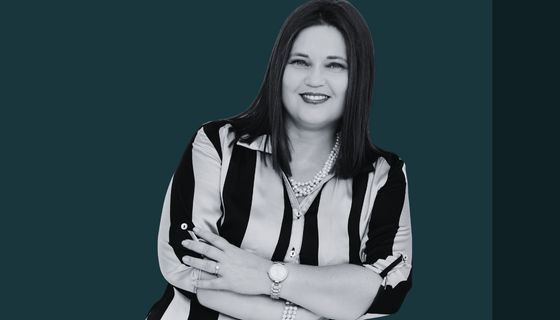
Kim Vermaak, a survivor of postnatal depression, offers heartfelt, practical workshops and talks that help teams and families build real coping structures. Her story is not just one of survival, but of building strong, supportive environments that promote healing.
👉 Reach out today to invite Kim to speak at your next wellness event, corporate training, or community program.
Because healing starts with understanding. No mother should have to walk through postnatal depression alone.
Kim Vermaak is a survivor of postnatal depression, author, and speaker who helps families, NGOs, faith-based communities, and corporates build practical support systems for new parents. With a compassionate, relatable approach, she shares her personal journey and proven strategies to promote emotional wellbeing during the postpartum period. Through talks and workshops, Kim empowers communities to understand the hidden struggles of motherhood and create environments where both parents and children can thrive.